
Pinglu Canal Now Open: 560 km Shorter to the Sea — Sichuan Sodium
QYJSSA/September 22,2026
Highlights
| 01 | On September 16, 2026, the Pinglu Canal officially opened to navigation. At 134.2 km and rated for 5,000-ton vessels, it shortens the inland waterway journey for Southwest China cargo bound for the sea by about 560 km |
| 02 | End-to-end logistics costs for shipments via Beibu Gulf ports are estimated to fall by 18%–30%, with transit times for some bulk commodities cut from 12–15 days to 5–7 days |
| 03 | Qingyi River Chemical operates a warehouse in Qinzhou, Guangxi, and exports to more than 30 countries and regions. The upgraded southbound sea corridor directly improves delivery reliability and cost competitiveness |
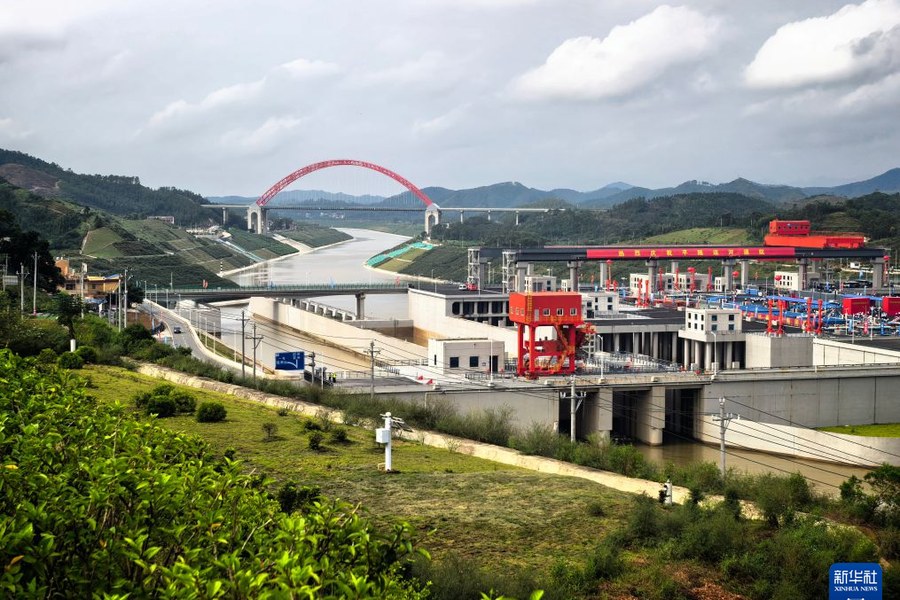
Fig. 1: The Madao Hub of the Pinglu Canal — the world's largest inland water-saving ship lock, with the greatest water-level drop of its kind. Source: Xinhua (via China.org.cn)
On September 16, the Pinglu Canal — the first river-to-sea canal planned and built at the national level since the founding of the People's Republic of China — officially opened to traffic. What does a canal have to do with sodium sulphate? This article answers three questions: what it is, how much it rewrites the logistics math for Southwest China, and what it means for overseas buyers sourcing sodium sulphate from Sichuan.
Pinglu Canal Opens September 16: The Xijiang River Links Up with the Beibu Gulf for the First Time
The canal starts at the Pingtang Estuary in the Xijin reservoir reach of the Xijiang River in Hengzhou, Nanning, runs south through Luwu Town in Lingshan County, Qinzhou, and follows the Qinjiang River down to the Beibu Gulf — 134.2 km in total. Construction began on August 28, 2022, with total investment of about RMB 72.7 billion (roughly US$10 billion). Built to Class-I inland waterway standards, it accommodates 5,000-ton vessels and is designed for a one-way annual throughput of 89 million tonnes — the highest-rated canal in China today.
The engineering is no small feat. The elevation drop from the starting point to the estuary is about 65 m, absorbed by three shipping hubs — Madao, Qishi, and Qingnian — with ships riding a "water elevator" through the locks. Among them, the Madao Hub is the world's largest inland water-saving ship lock with the greatest water-level difference: 29.6 m.
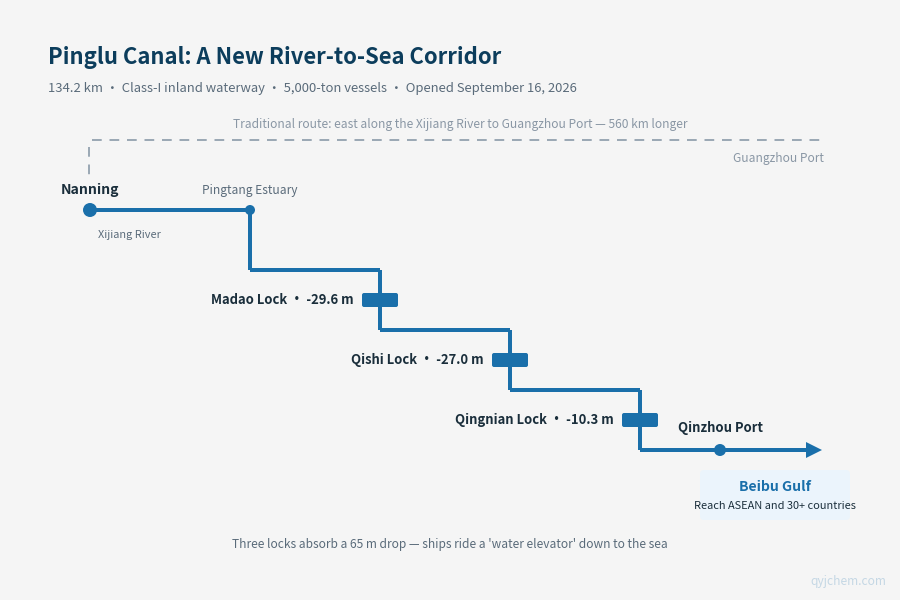
Fig. 2: The Pinglu Canal route versus the traditional sea route (schematic). Source: Qingyi River Chemical Co., Ltd.
560 km Shorter to the Sea; End-to-End Logistics Costs Down 18%–30%
The Pinglu Canal solves a long-standing problem: Guangxi has a coastline, but its inland waterways never connected to the sea. In the past, cargo from Southwest China could only travel east along the Xijiang River and detour through Pearl River Delta ports such as Guangzhou. "Guangxi cargo never shipped through Guangxi ports" became the norm.
With the canal open, cargo from the Nanning direction reaches Qinzhou Bay directly, cutting about 560 km from the inland journey. According to COSCO Shipping estimates, bulk cargo from Baise used to take 12–15 days to reach the sea on the traditional route; via the Pinglu Canal it takes just 5–7 days. End-to-end logistics costs can fall by 18%–30%, saving more than RMB 5 billion in transport costs every year.
Beibu Gulf Port's own fundamentals are strengthening as well. Qinzhou Port's international services already reach 523 ports in 124 countries and regions, and the hinterland cargo funneled in by the canal will further increase the frequency and capacity of southbound sailings.
What This Means for Sodium Sulphate Exports: Qingyi River's Qinzhou Warehouse and the Southbound Sea Link
Qingyi River Chemical's plant is located in Meishan, Sichuan Province. Its logistics system rests on three corridors: the Yangtze River golden waterway, the China–Europe Railway Express, and the New Western Land-Sea Corridor — for which the Pinglu Canal is the backbone project. The corridor's final key piece is now in place.
The more direct connection point is Qinzhou. Qingyi River operates a domestic warehouse in Qinzhou, Guangxi. Southbound sodium sulphate exports ship via Beibu Gulf Port to an overseas warehousing network covering Southeast Asia, South Asia, the Middle East, Africa, and South America, serving more than 30 countries and regions. With the canal open, Beibu Gulf Port's sailing frequency, capacity supply, and transshipment efficiency will all improve — which, for every single shipment, means more reliable schedules and more competitive freight rates.
For overseas buyers, the takeaway is practical: supplier delivery certainty has increased. Qingyi River offers an effective monthly supply of 65,000 tonnes under FOB/CIF/DAP terms and can ship from any Chinese seaport. The southbound route now adds a faster, more economical path to the sea — expanding the options and flexibility of order fulfillment.
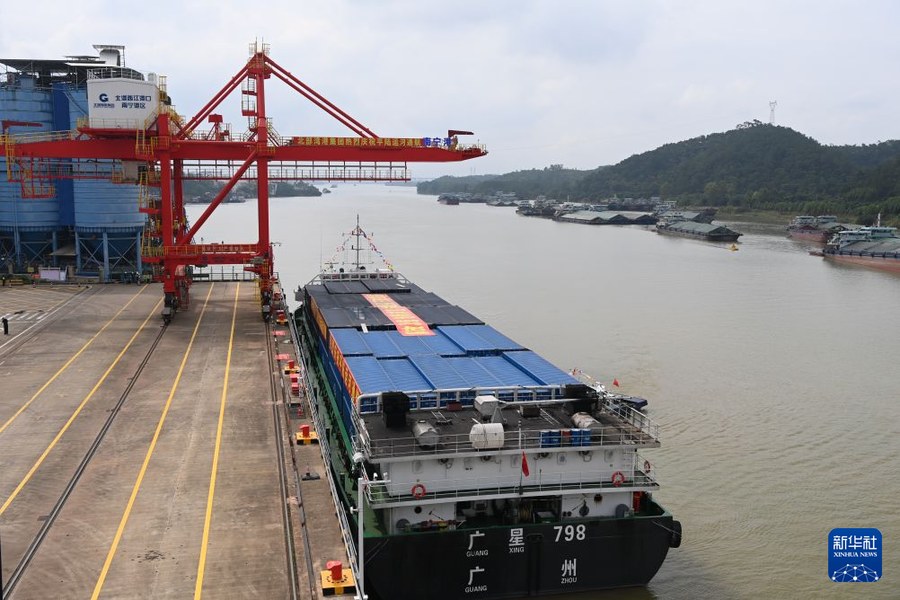
Fig. 3: A domestic-trade vessel at Nanning Port prepares to transit the Pinglu Canal for Yangpu Port. Source: Xinhua (via China.org.cn)
If you are evaluating the delivery capability of Chinese sodium sulphate suppliers, contact Qingyi River Chemical for a tailored logistics plan and quotation. Free samples and third-party quality inspection reports are available on request.
Submit an Inquiry →