
Behind CATL’s 60 GWh Sodium-Ion Battery Order: What Role Does Sodium Sulfate Play? (Part 1)
QYJSSA/June 25,2026
Highlights
| 01 | Today's mainstream, mass-produced sodium-ion batteries (CATL, HiNa Battery) use an organic-electrolyte route, in which Na2SO4 is not the electrolyte itself. Its role lies further upstream — in the synthesis of cathode materials — where high-purity sodium sulfate is involved. |
| 02 | Synthesizing sodium-ion battery cathode materials — especially Prussian Blue analogues (PBA) — requires a reliable high-purity sodium source. At China's top-level annual sodium sulfate industry conference in late 2025, high-purity sodium sulfate was formally designated as a strategic raw material for the energy-storage materials sector. |
| 03 | Mineral-sourced sodium sulfate has a structural advantage in batch-to-batch chloride-ion consistency. That, rather than generic industrial-grade procurement standards, is the real threshold for entering the electrochemical materials supply chain. |
In April 2026, CATL — the world's largest battery manufacturer — signed the largest sodium-ion battery order to date with energy-storage system integrator HyperStrong: three years, 60 GWh. HiNa Battery — one of the fastest-moving companies in the global commercialization of sodium-ion technology — built the world's first hundred-megawatt-hour-scale commercial sodium-ion storage project, which was officially connected to the grid in Qianjiang, Hubei Province, China in October 2025. Sodium-ion batteries have moved from a lab concept to signed factory orders.
For most industrial professionals, "sodium battery" is still a vague term. This article answers the first question: what is a mainstream sodium-ion battery, and what role does sodium sulfate play in the dominant organic-electrolyte route? The direct relationship between the aqueous-electrolyte route and sodium sulfate will be covered in Part 2.
What Is a Sodium-Ion Battery, and Where Does the Technology Stand Today?
Lithium-ion batteries store and release electrical energy by shuttling lithium ions (Li+) back and forth between the positive and negative electrodes. Sodium-ion batteries work on exactly the same principle, simply substituting sodium for lithium. The two elements sit in the same group of the periodic table and behave similarly, but the sodium ion is larger, making it harder to intercalate into and out of electrode materials — which is why early sodium batteries lagged noticeably in energy density and cycle life. That gap has narrowed quickly in recent years: breakthroughs in cathode-material R&D have pushed sodium-battery energy density close to lithium iron phosphate (LFP) levels, and against a backdrop of concentrated lithium resources and volatile prices, sodium's cost and supply advantages are becoming increasingly clear.
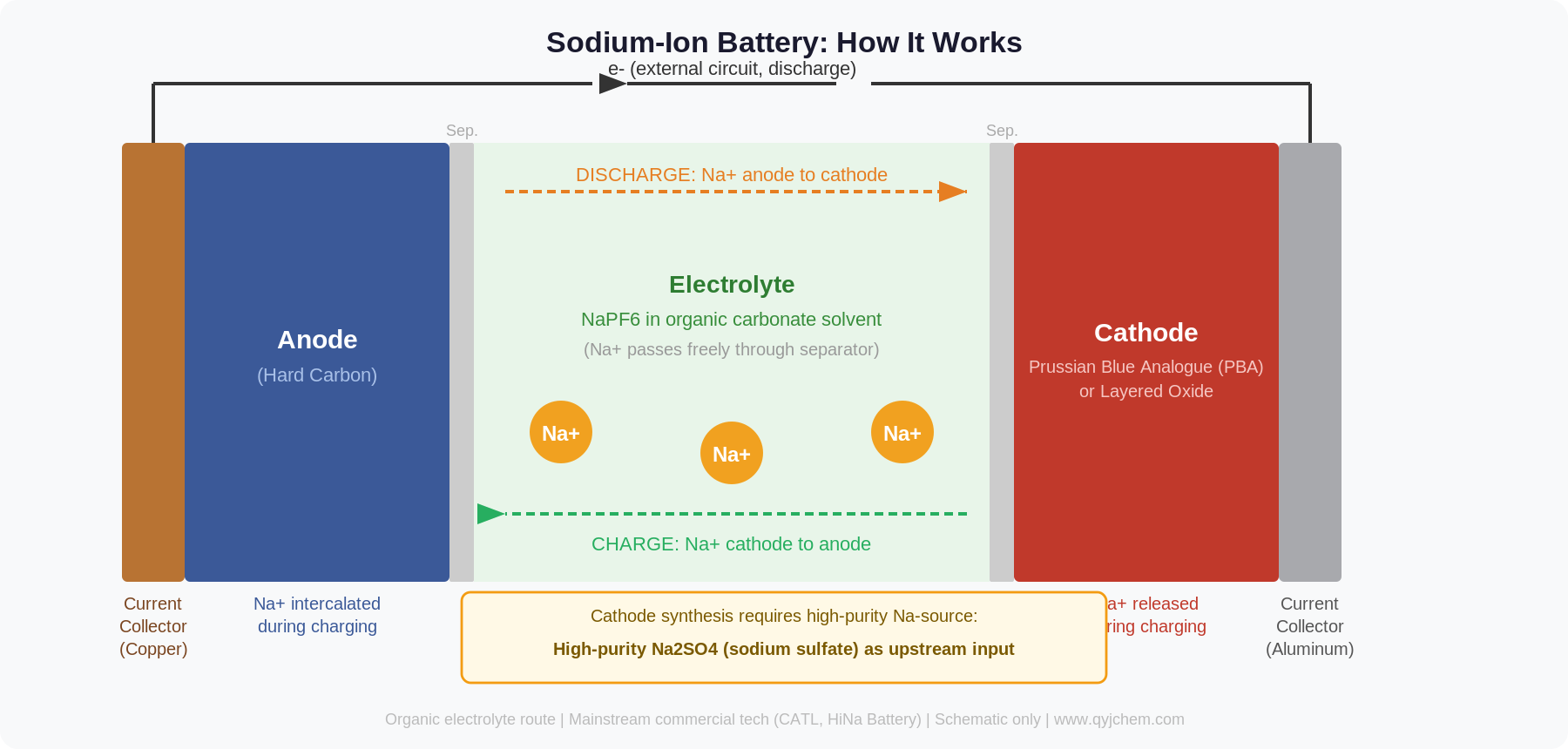
Figure 1: How a Sodium-Ion Battery Works (Image: Qingyi River Chemical Co.)
Real progress today: CATL's sodium-battery brand, Naxtra, has energy-storage products with a cycle life exceeding 15,000 cycles, with a second generation expected to reach an energy density of 200 Wh/kg and commercialize within 2026. HiNa Battery's Qianjiang, Hubei project has a cycle life of 12,000 cycles, with full-lifecycle storage cost down to about RMB 0.33/Wh (roughly US$0.046/Wh) and over 500 MWh in orders under negotiation. Global sodium-battery shipments were about 9 GWh in 2025, forecast to reach roughly 26.8 GWh in 2026 (+198% year-on-year), with installed capacity projected at 335 GWh by 2027 — energy storage accounting for about 45% of applications. China accounts for 82% of global shipments and remains the main driver of sodium-battery industrialization today.
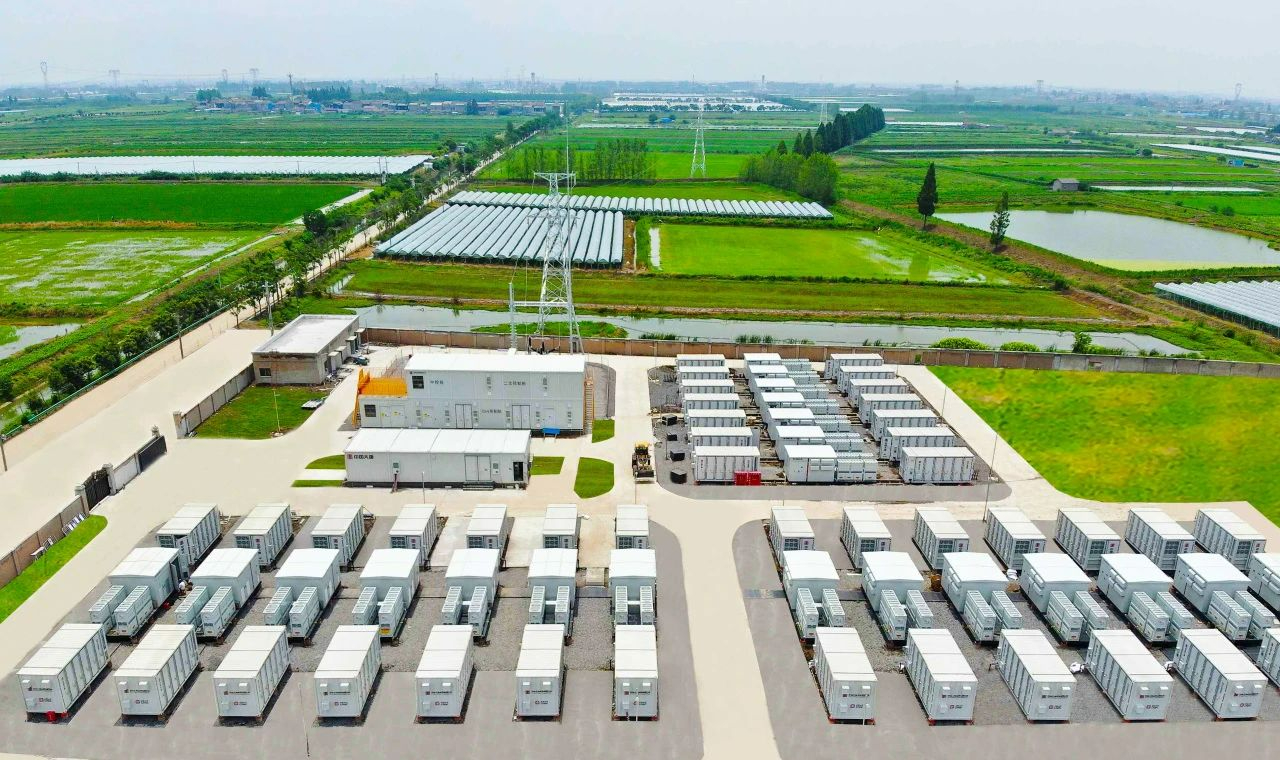
Figure 2: Datang Hubei Sodium-Ion Energy Storage Station, Qianjiang, Hubei (Source: HiNa Battery official website)
Sodium batteries aren't suited to premium passenger cars — their sweet spot is utility-scale grid storage, backup power for industrial parks, and backup power for telecom base stations: applications that don't demand extreme energy density but do care about cost, safety, and low-temperature performance. That happens to be exactly the fastest-growing segment of today's energy-storage industry.
Mainstream Sodium Batteries Use Organic Electrolytes — So Where Does Sodium Sulfate Fit In?
The largest commercially deployed sodium-ion batteries today — led by CATL and HiNa Battery — all use electrolytes made of sodium salts such as NaPF6 dissolved in organic carbonate solvents, a structure highly similar to the organic systems used in lithium-ion batteries. To be clear: Na2SO4 is not the electrolyte material in these batteries.
Sodium sulfate's role lies further upstream. Sodium-ion battery cathode materials fall into three main categories: layered oxides, Prussian Blue analogues (PBA), and polyanionic compounds. Among these, Prussian Blue analogues are considered one of the most promising routes for large-scale mass production, thanks to their low synthesis cost and relatively mature process. Synthesizing cathode materials requires a reliable high-purity sodium source to control the stoichiometry and crystal structure of the product. At China's top-level annual sodium sulfate industry conference in late 2025, high-purity sodium sulfate was explicitly positioned as a strategic raw material for the energy-storage materials sector — a formal industry acknowledgment, at the supply-chain level, of Na2SO4's role as an upstream sodium source for electrochemical materials.
This connection is more indirect than "serving directly as the electrolyte," but it covers a far larger commercial market. As cathode materials move from the lab to large-scale mass production, scrutiny of sodium-source purity and batch-to-batch consistency will only intensify.
Why Is High-Purity Sodium Sulfate Entering the Sodium-Battery Materials Supply Chain?
Electrochemical-material production is far more sensitive to feedstock impurities than industrial-grade applications. Material synthesis for organic systems tends to favor feedstock with stable purity, low chloride content, and traceable origin — purity is just the entry requirement; batch-to-batch chloride-ion consistency is the real threshold.
The impact of Cl− on electrochemical-material synthesis is systemic: chloride ions interfere with crystal-structure formation, leave defects in electrode materials, and ultimately affect the battery's cycling stability. This effect is hard to detect in a single quality check — it typically only shows up in yield-rate statistics after large-scale mass production.
Mineral-sourced sodium sulfate has a structural advantage on this metric. About 90% of the world's mirabilite (Glauber's salt) reserves are concentrated in China, with Sichuan accounting for more than 45% of the national total — making it the world's most important sodium sulfate resource base. The main associated impurities in mirabilite ore are sulfates, with low and predictable background chloride levels; chloride from chemical-byproduct sources, by contrast, fluctuates with the primary production process and is opaque to buyers. Ore from the Qingyi River Baita mine contains roughly 40% Na2SO4, above China's national average of 24.24%, and a dedicated dechlorination process further narrows the batch-to-batch Cl− range — this is the substantive credential for entering the electrochemical materials supply chain, not merely a generic industrial-grade procurement standard.
To learn more about Cl− control data for our high-purity sodium sulfate, request continuous batch-testing reports, or order product samples, please get in touch via our website's contact page.
Submit an Inquiry →